A digital dental scan is a 3D image of your teeth and gums captured with a light-based intraoral scanner. It replaces traditional putty impressions and supports accurate, efficient treatment planning.
Digital Scanner in Mt. Prospect, Elk Grove Village, Bartlett and Chicago, IL: Comfortable, Precise Dental Impressions
At Associates For Oral, Maxillofacial & Implant Surgery, LTD, a digital scanner creates a precise 3D model of your teeth and gums without messy impression trays. Patients seeking a digital scanner Mt. Prospect, Elk Grove Village, Bartlett and Chicago, Illinois, can expect a fast, comfortable process that supports accurate diagnosis, treatment planning, and seamless communication with your restorative dentist or orthodontist.
Digital Scanner Technology Explained
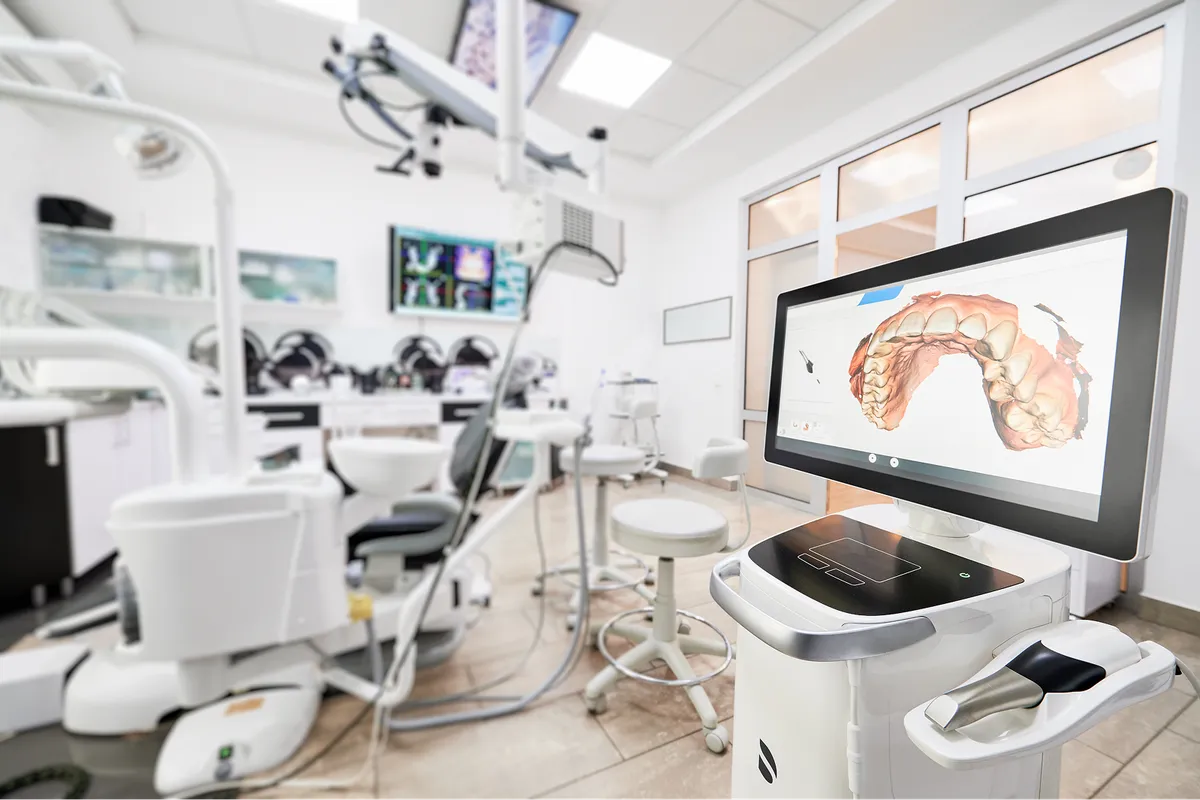
A digital scanner (often called an intraoral scanner) is a handheld device that captures thousands of images per second and stitches them into a high-resolution 3D map of your mouth. The wand glides over the teeth and soft tissues while the software builds a real-time model on the screen. Unlike traditional impressions that rely on putty materials, this method is clean, efficient, and repeatable.
Oral surgery and implant care benefit from digital scanning because it helps visualize anatomy, plan guided implant placement, and verify the fit of prosthetics. The scan can be combined with other imaging such as CBCT to create a comprehensive plan. The result is a more predictable workflow from consultation through surgery and final restoration.
Benefits of Digital Scanning
- Improved comfort with no impression trays or putty.
- High accuracy that reduces adjustments and remakes.
- Real-time visualization to review teeth and bite from many angles.
- Fast appointments with quick scan capture and instant files.
- No radiation because the scanner uses light-based imaging.
- Easy collaboration with your dentist or lab through secure file sharing.
- Useful for implants, crowns, bridges, clear aligners, and surgical guides.
How Digital Scanning Works
The process is straightforward and well tolerated by most patients:
- Initial review ensures your teeth are clean and dry for clear images.
- The wand is passed over the upper arch, lower arch, and your bite.
- The software aligns images into a 3D model while you watch on screen.
- Your clinician checks detail in key areas and rescans if needed.
- The final file is saved and securely transferred to the lab or your dentist.
In implant planning, the digital impression may be merged with CBCT data to map bone anatomy and design a surgical guide. This pairing improves precision and helps visualize how the final restoration will fit your bite.
What to Expect During Your Scan
Most scans take only a few minutes. You will sit comfortably while the wand moves gently around your mouth. There is no heat, vibration, or taste. If you have a strong gag reflex, short scan segments and rest breaks can make the experience easier. You can breathe through your nose as usual, and communication with your team remains easy throughout.
Afterward, your clinician will review the 3D model with you, pointing out areas relevant to your care. The digital file becomes part of your record and can be used to plan implant placement, design temporary or final restorations, or monitor changes over time. While digital scanning provides a detailed surface map, you may still need X-rays or CBCT for internal structures that light-based scanning cannot capture.
For questions or to plan your visit with our oral surgeons, contact Associates For Oral, Maxillofacial & Implant Surgery, LTD today. Appointments are available across Mt. Prospect, Elk Grove Village, Bartlett, and Chicago.
Digital Scanner
Expert Care
Our team provides personalized digital scanner treatment plans tailored to your unique needs.
Contact Us
Schedule Today
Ready to learn more? Contact our office to schedule a consultation and discuss your treatment options.

Frequently Asked Questions About Digital Scanner
The scanner takes thousands of photographs per second and software assembles them into a detailed 3D model. It captures the upper and lower arches and your bite, allowing precise analysis of tooth position and occlusion.
No. A digital scanner uses optical imaging with visible light, so there is no radiation exposure. For bone evaluation, your provider may still recommend X-rays or CBCT, which are separate imaging types.
Most scans take a few minutes per arch. Time varies with the number of teeth, the presence of restorations or appliances, and the purpose of the scan, such as implants or aligner planning.
Digital impressions provide highly consistent results and reduce common errors like distortion and voids. The real-time model allows immediate verification and quick touch-ups where additional detail is needed.
Yes. Because there is no bulky tray or putty, many patients with a gag reflex find scanning easier. Short pauses, careful positioning, and breathing techniques can further improve comfort.

Contact Us Today
Schedule Your Consultation